
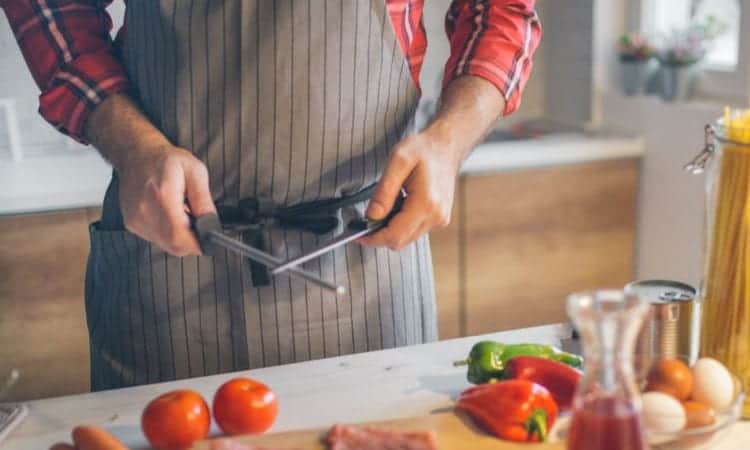
How To Sharpen A Knife With A Rod: The Complete Guide to Honing Your Blades Like a Pro
Perhaps you have always had a rod in your kitchen set or are thinking of buying one. Whatever the case, you may be wondering how to actually use it properly and effectively.
Sharpening rods, also commonly called honing rods, are very helpful tools that every serious home cook and professional chef should master. Sharpening rods can help lengthen the life of your blade and help to maintain a sharp and efficient set of kitchen knives.
The main jobs of honing rods are to straighten the blade’s edge, smooth out rough patches, and revive dull, tired knives. However, this will not be the case if you use the rod improperly.
This comprehensive guide will explain how to sharpen a knife with a rod in detailed, easy-to-follow steps. We will also cover everything else you need to know, including what a sharpening rod is, how it compares to other sharpening methods, and the science behind why it works.
Not only will you find out how to sharpen with a rod, but you will also learn about the different kinds of sharpening rods you can buy, proper maintenance techniques, and common mistakes to avoid.
If you are ready to become a knife honing expert and learn what sharpening rod will be best suited for you, keep reading.
What Is a Sharpening Rod?
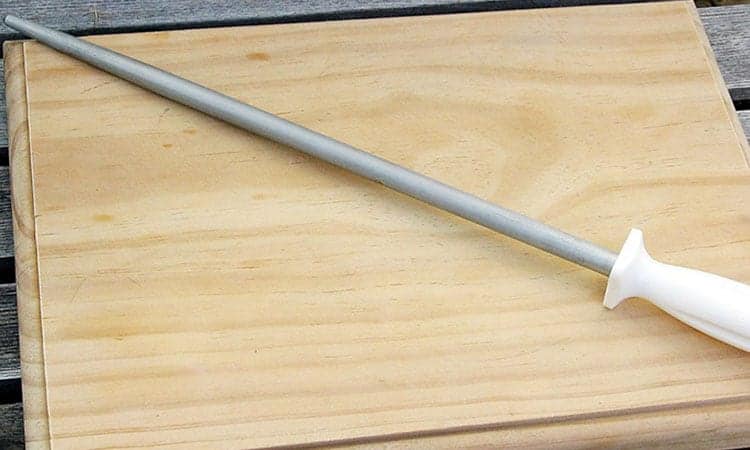
A sharpening rod is a piece of steel that people use to hone knives. Most honing rods are steel, but you can also find ceramic sharpening rods and diamond-coated steel rods.
Sharpening rods are usually about a foot long and are either oval, flat or round. The handle is typically made of wood, plastic, or metal with a guard to protect your hand during use.
A sharpening rod, also called a honing rod, straightens the edge of knife blades. While this is not the same thing as sharpening, it will improve how well your knife will cut.
Sharpening rods will smooth out any rough patches on your blade as well as revive any edges that may have dulled over time. The process works by realigning the microscopic teeth along the knife’s edge rather than removing metal like traditional sharpening methods.
The most important thing to remember about sharpening rods is that they won’t necessarily sharpen your blade in the traditional sense. Most “sharpening rods” on the market are actually honing rods, which maintain rather than create a new edge.
The Science Behind Honing: Why Knife Edges Become Dull
Understanding why knives become dull helps explain why honing rods are so effective. When you use a knife, the microscopic teeth along the edge (called the microserrations) become bent, folded, or misaligned rather than actually worn away.
Think of these tiny teeth like the bristles on a brush. When new, they all point in the same direction and work together efficiently. Over time and use, some bristles bend to one side or the other, reducing the brush’s effectiveness. Honing works like combing those bristles back into alignment.
This is why a knife can feel dull even when it hasn’t lost significant metal from the edge. The cutting ability is compromised not by the absence of sharp metal, but by the misalignment of the sharp metal that’s already there.
How Does Honing Compare to Other Sharpening Methods?
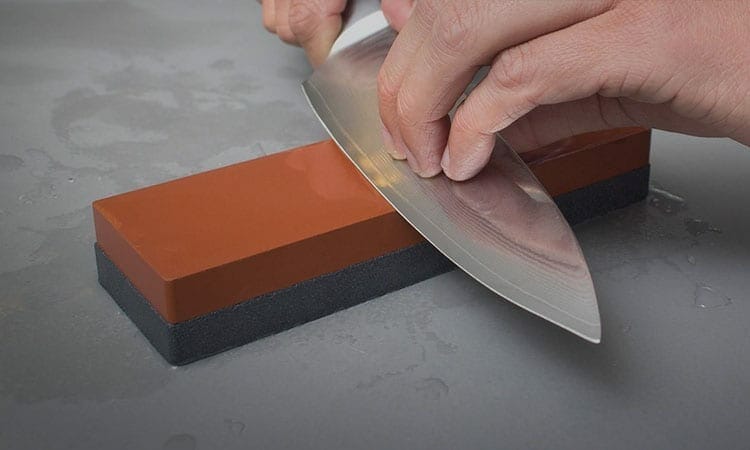
If you are wondering how to sharpen a knife with a rod, you may also question how well it works compared to other sharpening methods.
Sharpening Rods vs. Whetstones
The majority of other sharpening methods, like sharpening stones, will remove steel on the blade to create a new, sharper edge. However, the main job of sharpening rods is to simply maintain the sharpness.
Whetstones are more aggressive and create a completely new edge by grinding away metal. This process takes longer but can restore even very dull knives to razor sharpness. Honing rods work much faster but are limited to maintaining existing sharp edges.
When to Use Each Method
Use honing rods for regular maintenance – ideally every few uses of your knife. Use whetstones when your knife has become so dull that honing no longer improves its cutting ability, typically every few months depending on usage.
Sharpening Rods Will Maintain Your Blades Sharpness
As mentioned above, sharpening rods will maintain the sharpness of your blade. Your knife blade has dozens of very small teeth on the edge. As you use the knife, the teeth can become misaligned or be bent/dulled. Honing rods will realign the teeth on the edge of your knife and will make the knife feel sharp again.
Even though sharpening rods do not sharpen the blade in the traditional sense, they are still crucial for maintaining a sharp knife. The main advantage that honing rods have over other sharpening methods is that you won’t have to sharpen your knife nearly as much as you would if you didn’t use a sharpening rod.
Step-by-Step Guide: How To Sharpen With a Rod
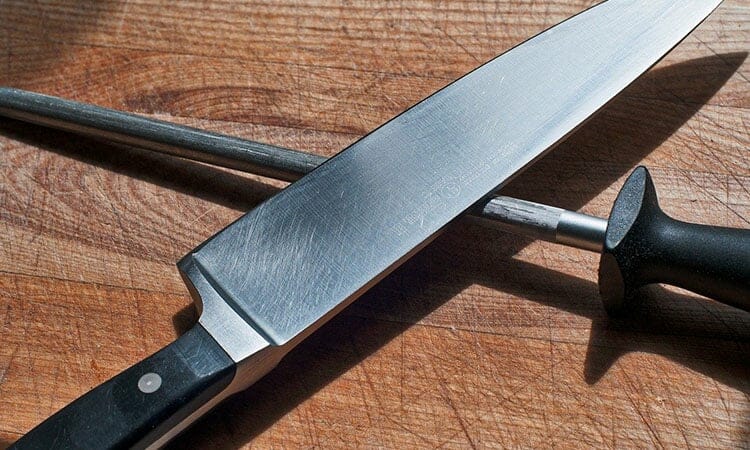
This section will explain how to sharpen a knife with a rod in detailed, easy-to-follow steps.
Preparation Phase
Step 1: Set Up Your Workspace
- Get a dry cutting board and place it on the counter. Choose a stable surface that won’t slip during the honing process.
- Ensure good lighting. You need to see the angle between the blade and rod clearly.
- Clear the area around you. Make sure you have enough space to move the knife safely.
Step 2: Position the Honing Rod
- Take your sharpening rod and place the tip on the cutting board. Hold it down firmly with the tip against the board or counter.
- Hold the rod at a slight angle. About 90 degrees to the counter surface works best.
- Maintain a firm grip on the handle. Your hand should be well above the guard to avoid injury.
Honing Technique
Step 3: Position the Knife
- Place the heel of the blade against the rod. Make sure that the knife is near the top of the sharpening rod, near the handle.
- Set the proper angle. The blade should be at a 15-20 degree angle for most knives. German knives typically need 20 degrees, while Japanese knives work better at 15 degrees.
- Keep your fingers clear. Always maintain control of the knife with your cutting hand while keeping your other hand safely away from the blade path.
Step 4: Execute the Honing Stroke
- Slide the blade down the entire length of the sharpening rod. Make sure to maintain light but consistent pressure throughout the process and keep the blade at the proper angle.
- Use a sweeping motion. As you run the blade down the rod, sweep in a motion that moves the knife blade from left to right (or right to left, depending on which side you’re working).
- Follow through completely. By the time the blade reaches the bottom of the rod, the tip of the knife should be touching the rod.
- Count your strokes. Complete the motion slowly and deliberately – rushing increases the risk of injury and reduces effectiveness.
Step 5: Repeat and Alternate
- Repeat this stroke 3-5 times on one side of the blade. For moderately dull knives, 3 strokes per side is usually sufficient. Very dull knives may need up to 10 strokes per side.
- Switch sides and repeat. Always alternate sides to ensure even honing of both sides of the blade.
- Maintain consistency. Keep the same angle and pressure for each stroke.
Finishing Phase
Step 6: Clean and Test
- Rinse the blade and wipe it dry. Your knife may have some small metal filings on the blade. If you are cutting food right away, these tiny pieces of metal could get into the food you are preparing.
- Test the sharpness safely. Use the paper test – a properly honed knife should easily slice through a piece of paper.
- Store properly. Return the honing rod to its designated storage location and ensure the knife is stored safely.
Pro Tips for Perfect Honing
There are several important considerations when using a sharpening rod that can make the difference between effective honing and wasted effort:
Angle Consistency
The most crucial aspect of honing is maintaining a consistent angle. Most people struggle with this initially. Practice the motion slowly without applying pressure until you can repeat the same angle consistently.
Pressure Control
Use only light pressure – let the weight of the knife do most of the work. Too much pressure can actually damage the blade or create an uneven edge.
Timing and Frequency
Hone your knives before each major cooking session, not after. This ensures you’re working with the sharpest possible edge throughout your food preparation.
Rod Length Considerations
As a general rule of thumb, your sharpening rod should be at least as long as your knife or longer. This will make the process more efficient and ensure you can hone the entire length of the blade in one stroke.
Accessibility
Make sure your honing rod is easily accessible at all times while in the kitchen. Just a quick few strokes on the rod can prevent the need for sharpening your knife for weeks. The more you use your sharpening rod, the less you will have to use a sharpening block.
Types of Sharpening Rods: Which One is Right for You?
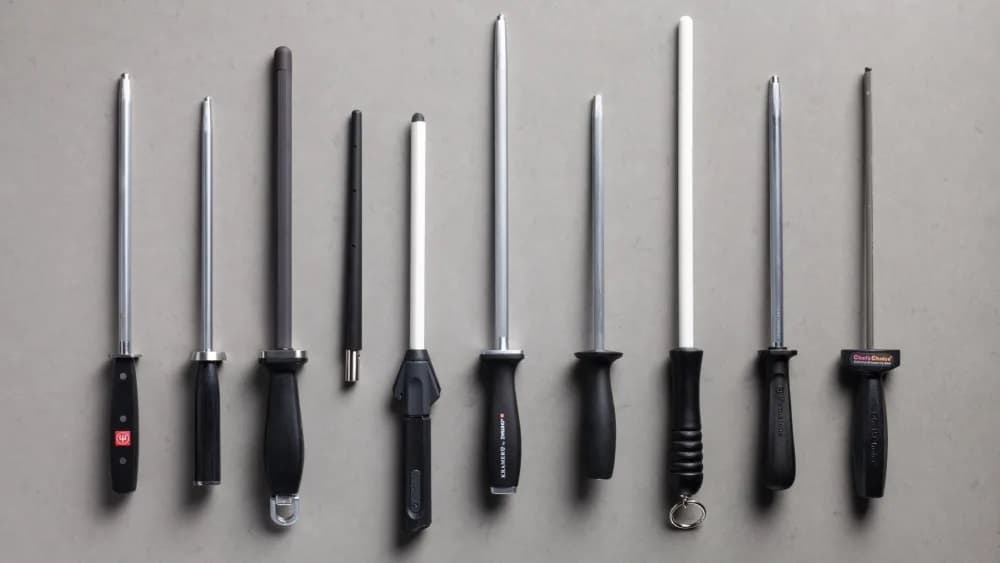
Even though you may know how to sharpen a knife with a rod, you may be unfamiliar with the different kinds of rods out there. Not all sharpening rods are the same; there are three different kinds, each with specific advantages and use cases.
Steel Honing Rods
Steel honing rods are the most common types of sharpening rods you will find in most kitchens. Many knife sets come with steel honing rods. They are also the oldest and most traditional.
Steel honing rods either have smooth surfaces or have tiny ridges along the length of the tool. There are benefits to both kinds of rods.
Ridged Steel Rods
Rods with rough ridges tend to shape the teeth on the blade more aggressively. Knives that you sharpen with rough honing rods will be able to cut a bit better initially.
However, the rough steel rods are also harder on the knife itself. These kinds of rods will lower the life of your blade and wear down the edge much faster. They’re best for knives that see heavy daily use and can handle more aggressive maintenance.
Smooth Steel Rods
On the other hand, smooth steel honing rods do not wear down the blade since they don’t have ridges. They provide gentler maintenance that preserves the knife’s lifespan.
Something to note about smooth steel rods, though, is that they can damage Japanese knives, which typically have harder steel that can chip against steel rods.
Diamond Honing Rods
Diamond honing rods are great for those who want rods that sharpen your blade and not just hone them. These rods are coated with industrial diamond particles, making them extremely effective.
Since diamond rods are so hard, they will actually sharpen your blade as well as hone it by removing small amounts of metal. For this reason, you should never use a diamond honing rod for regular maintenance. If you do, you will drastically lower the lifespan of your knife.
Diamond honing rods are good for:
- Quick sharpening sessions that don’t require full-fledged sharpening stones
- Very hard steel knives that resist traditional honing
- Knives that have minor chips or damage that need more than realignment
Use diamond rods sparingly – perhaps once every few weeks rather than daily.
Ceramic Honing Rods
Ceramic rods are a happy medium between steel and diamond honing rods. They are harder than steel but are much less aggressive than diamond sharpening rods.
Many ceramic rods have a very fine grit. While this could potentially wear down a blade, it won’t do near as much damage as rough steel would do.
Ceramic rods can smooth and clean the edge of the blade while straightening the teeth simultaneously. The tool will remove any weak edges on the blade and only leave strong and sharp edges.
Benefits of Ceramic Rods
- Excellent for Japanese knives with hard steel
- Remove minimal metal while providing effective honing
- Work well for both maintenance and light sharpening
- Don’t require as much pressure as steel rods
Ceramic Rod Considerations
One important thing to mention about ceramic rods is that you will have to be careful with them. If you drop them on the floor, they can break quite easily. They’re also more expensive than steel rods but last longer when properly cared for.
Size Considerations
Sharpening rods also come in many different sizes. If you want to buy only one honing rod, we recommend picking up a rod that is about 12 inches. This size will give you some wiggle room for larger knives such as 10-inch blades. You will also be able to hone smaller knives with a 12-inch rod.
For professional kitchens or serious home cooks, consider these size options:
- 8-10 inches: Good for paring knives and smaller utility knives
- 12 inches: Ideal all-around size for most home kitchens
- 14+ inches: Best for large chef’s knives and professional use
Common Mistakes to Avoid When Honing
Learning how to properly use a honing rod involves understanding what not to do as much as what to do correctly.
Using the Wrong Angle
Too steep an angle (over 25 degrees) can damage the blade, while too shallow an angle (under 10 degrees) won’t effectively realign the edge. Most knives work best between 15-20 degrees.
Applying Too Much Pressure
Heavy pressure doesn’t make honing more effective – it actually makes it less effective and can damage your knife. Let the rod do the work.
Honing Too Frequently
While regular honing is beneficial, excessive honing (multiple times per day) can actually wear down your blade unnecessarily. Once per cooking session is typically sufficient.
Using the Wrong Type of Rod
Using a diamond rod for daily maintenance or a steel rod on very hard Japanese knives can cause damage. Match your rod type to your knives and usage patterns.
Neglecting Safety
Always hone away from your body, keep fingers clear of the blade path, and maintain control of both the knife and rod throughout the process.
Maintenance and Care of Your Honing Rod
Like any tool, honing rods require proper care to remain effective.
Cleaning Your Rod
After each use, wipe down your honing rod with a damp cloth to remove any metal particles. For deeper cleaning, use warm soapy water and dry thoroughly to prevent rust (for steel rods).
Storage
Store your honing rod in a knife block, magnetic strip, or dedicated drawer slot where it won’t bang against other tools. Proper storage prevents damage and maintains safety.
When to Replace
Steel rods can last decades with proper care, but ceramic and diamond rods may need replacement every 5-10 years depending on usage. Look for chips, cracks, or significant wear as signs it’s time for a new rod.
Choosing the Right Honing Rod: Buying Guide
When selecting a honing rod, consider these factors:
Your Knife Types
- German knives (Wüsthof, Henckels): Work well with steel or ceramic rods
- Japanese knives: Best with ceramic rods to avoid chipping
- Budget knives: Steel rods are cost-effective and sufficient
Usage Frequency
- Daily cooking: Invest in a quality ceramic rod
- Occasional cooking: A good steel rod will suffice
- Professional use: Consider having multiple rod types
Recommended Products
Here are some highly-rated honing rods to consider:
- Best Overall: Wüsthof Classic 10-inch Honing Steel – Excellent build quality and versatility
- Best Ceramic: Kyocera Advanced Ceramic Honing Rod – Perfect for Japanese knives
- Best Diamond: DMT Diamond Steel – For occasional sharpening needs
- Budget Choice: Victorinox Honing Steel – Great value for money
Advanced Honing Techniques
Once you’ve mastered basic honing, these advanced techniques can further improve your results:
The Draw Method
Instead of holding the rod vertically, some professionals prefer to lay the rod nearly horizontal and draw the knife across it. This method can provide better angle control for experienced users.
Micro-Beveling
For knives that will see heavy use, consider creating a small micro-bevel by finishing with a slightly steeper angle (2-3 degrees steeper) for the final stroke on each side.
Sectional Honing
For very long knives, hone in sections rather than trying to cover the entire blade in one stroke. This ensures more consistent contact and better results.
Frequently Asked Questions
How often should I hone my knives?
For regular home cooking, hone your knives every 2-3 uses or whenever you notice them feeling less sharp. Professional cooks may hone daily or even multiple times per day depending on usage.
Can I damage my knife by honing incorrectly?
Yes, using the wrong angle, too much pressure, or the wrong type of rod can damage your knife. Start with light pressure and practice the motion slowly until you’re confident in your technique.
What’s the difference between honing and sharpening?
Honing realigns the existing edge without removing significant metal, while sharpening removes metal to create a new edge. Honing maintains sharpness, while sharpening restores it.
Should I use the same angle for all my knives?
No, different knives benefit from different angles. German knives typically use 20-degree angles, Japanese knives work better at 15 degrees, and some specialty knives may need different angles entirely.
Can I hone serrated knives?
Serrated knives should not be honed with a traditional rod, as this can damage the serrations. They require special serrated knife sharpeners or professional sharpening services.
Is it normal to see metal particles after honing?
Yes, some fine metal particles are normal, especially when using diamond or ceramic rods. Always rinse and dry your knife after honing to remove these particles before food preparation.
How do I know if my knife needs sharpening rather than honing?
If honing no longer improves your knife’s cutting ability, or if the blade won’t cleanly slice through paper or struggles with basic tasks like cutting tomatoes, it’s time for proper sharpening.
Can I use a honing rod on expensive Japanese knives?
Use only ceramic honing rods on high-end Japanese knives, as steel rods can chip or damage the harder steel. Many Japanese knife manufacturers recommend ceramic rods or professional maintenance only.
Related Articles
For more knife care and maintenance information, check out these related guides:
- Ultimate Guide to Knife Sharpening – Learn when and how to properly sharpen your knives
- How To Clean A Sharpening Stone – Maintain your sharpening equipment
- 8 Ways To Tell If A Knife Is Sharp – Test your knife’s sharpness safely
- What Steel Knives Are Better for Any Particular Situation? – Choose the right steel for your needs
- 9 Popular Knife Handle Materials – Understanding knife construction
Conclusion
We hope that this comprehensive guide has helped you understand how to sharpen a knife with a rod properly and effectively.
There are three main types of sharpening rods – steel, ceramic, and diamond – each with specific advantages for different types of knives and usage patterns. Sharpening rods straighten the microscopic teeth of blades, which increases how sharp they feel and perform.
Honing rods can also smooth out any rough patches on your blade and significantly extend the time between necessary sharpenings. The main benefit of using sharpening rods is that they help maintain the sharpness of the knife with minimal metal removal.
The more consistently you use a honing rod, the less frequently you will need to sharpen your knives, saving both time and money while keeping your blades in optimal condition.
Remember that proper technique is crucial – maintain the correct angle, use light pressure, and choose the right rod for your specific knives. With practice, honing becomes second nature and will dramatically improve your cooking experience.
Mastering the art of honing is an essential skill for anyone serious about cooking. It’s not difficult to sharpen a knife with a rod once you understand the proper technique, but the benefits – sharper knives, longer blade life, and more enjoyable cooking – are significant.
Sources
- Wikipedia.org – Honing Steel
- The Spruce Eats – How to Use a Knife Sharpening Steel
- Bon Appétit – How to Use a Honing Rod
- Cook’s Illustrated – The Best Way to Sharpen Knives
- Serious Eats – Knife Maintenance and Sharpening