
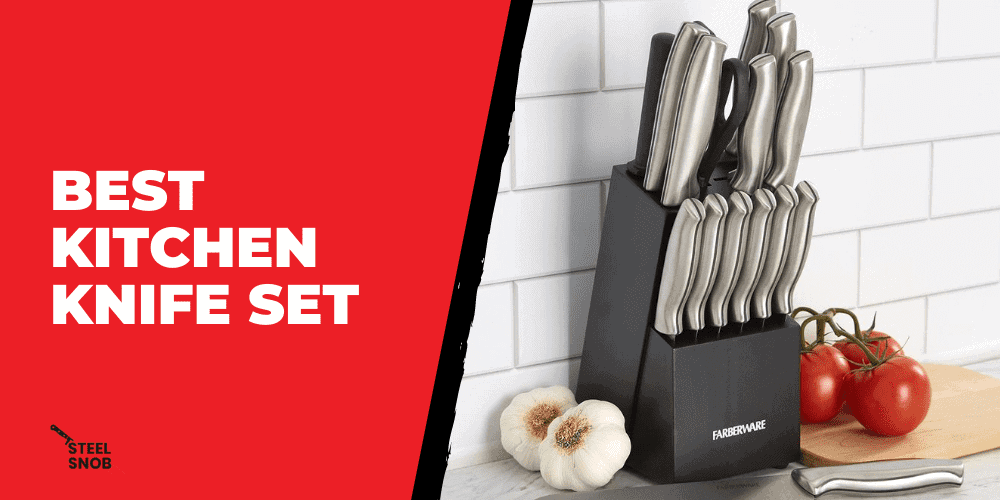
Best Kitchen Knife Sets Overview
The best kitchen knife set for most home cooks centers on a compact forged collection built around a strong chef knife rather than a large block filled with rarely used items. A solid set should deliver reliable edge retention, comfortable handling, and durability through daily use. Focus on brands with proven steel quality and construction rather than piece count or marketing claims. The options below represent real lineups from established makers that balance performance with practicality.
Why a Smaller Set Outperforms a Large Block
Most households reach for the same three or four knives repeatedly. An 8 inch chef knife handles chopping and slicing, a paring knife manages detail work, a bread knife cuts through crusts, and a utility knife covers in between tasks. Larger sets often add steak knives, shears, and gadgets that occupy space without adding value. Buying a smaller forged collection avoids paying for filler and lets you select only pieces that match your cooking style. This approach also simplifies storage and maintenance since fewer blades require sharpening and honing.
Wüsthof Classic: Forged German Workhorse
The Wüsthof Classic lineup uses fully forged high carbon stainless steel with a full bolster for each blade. Sets typically include an 8 inch chef knife, paring knife, bread knife, and honing steel, with some configurations adding a utility knife. The 14 degree edge angle per side produces a sharp out of box performance that holds well under regular home use. The full bolster provides a natural finger guard and adds balance for confident cuts. These knives withstand drops and heavy use while remaining straightforward to maintain with regular honing. The main limitation appears when sharpening the heel area near the bolster, which requires extra care over time. Home cooks who want one dependable set for years find this line consistent and forgiving of varied techniques.
Zwilling Pro: Open Heel Design for Maintenance
Zwilling Pro knives start as single piece Sigmaforge steel with a curved half bolster that leaves the heel open. This construction allows full edge sharpening from tip to handle without obstruction. Sets range from small starters to larger blocks that include a santoku or boning knife alongside the standard chef, paring, and bread options. The 15 degree edge geometry supports rock chopping motions and resets more easily during home sharpening sessions. Cooks who prefer to maintain their own edges appreciate the access to the entire blade. The curved bolster suits rolling cuts but may require adjustment for those accustomed to straight handles. Overall the line prioritizes long term usability over initial factory sharpness.
Budget and Lightweight Choices
Victorinox Fibrox Pro offers stamped high carbon stainless blades with a textured non slip handle in small bundles of four or five pieces. The geometry stays thin and agile, delivering strong cutting performance without added weight or cost. These knives suit first kitchens, students, or anyone who values function over appearance. Henckels Classic and Statement lines provide larger blocks with more pieces at lower price points. Some sets use stamped construction while others are forged, so checking the specific model matters. Both options work for households that want a complete block appearance and a knife for every basic task without premium pricing. The trade off is shorter edge life compared with fully forged competitors and more filler pieces in bigger configurations.
Japanese Style and Premium Options
Global Classic knives feature one piece CROMOVA 18 stainless construction with a hollow sand filled handle for balance. The lightweight feel and seamless design appeal to cooks who find traditional German handles heavy. Small sets focus on a chef or santoku, paring, and utility blades. Shun Classic uses a VG MAX core with Damascus cladding for a harder edge around 60 plus on the Rockwell scale. These sets deliver precision slicing suited to fish and vegetables but require softer cutting boards to avoid chipping. Made In bundles provide forged X50CrMoV15 steel in small collections without a block, giving buyers control over exactly which pieces to add. Cangshan TV2 and N1 series deliver forged blades in well finished blocks at mid range pricing, serving as an alternative when budget limits access to older German brands.
Steel Quality and Construction Basics
Steel hardness determines edge behavior. German stainless steels typically measure 56 to 58 on the Rockwell scale, offering toughness and easier re sharpening. Japanese steels often reach 60 or higher, holding edges longer yet increasing chip risk on hard surfaces. Forged blades generally provide better balance and durability than stamped ones, though excellent geometry can make stamped knives competitive for everyday tasks. Full tang construction adds strength, while bolster style affects sharpening access and grip comfort. Avoid sets that advertise generic steel without naming the actual alloy or maker, as these rarely match the performance of established lines.
Care Practices That Extend Knife Life
Regular honing maintains the edge between sharpenings and prevents premature dulling. Hand washing and immediate drying protect the steel and handles from corrosion or warping. Store knives in a block, on a magnetic strip, or in individual sheaths rather than loose in a drawer. Use appropriate cutting boards to reduce edge damage and avoid twisting motions that stress the blade. Professional sharpening once or twice a year restores performance when home methods no longer suffice. These habits apply equally to forged and stamped knives and keep any quality set functional for many years.
Frequently Asked Questions
How many knives does a typical household actually need?
Three to five pieces cover the majority of tasks for most cooks. An 8 inch chef knife, paring knife, bread knife, and utility knife handle chopping, detail work, crusty loaves, and general slicing without excess.
Should I choose forged or stamped construction?
Forged knives offer greater durability and balance for frequent use, while stamped knives provide lighter weight and lower cost when performance geometry is strong. Both types work well when the steel and edge angles are appropriate for the intended tasks.
What is the difference between German and Japanese style knives?
German knives tend to be thicker and tougher with edges around 14 to 15 degrees, suiting heavy chopping and forgiving technique. Japanese style knives are often thinner and harder with finer edges that excel at precise slicing but require more care to avoid chipping.
How often should knives be honed and sharpened?
Hone before or after most uses to keep the edge aligned. Professional sharpening or careful home methods become necessary when the blade no longer cuts cleanly through paper or tomatoes, typically every few months depending on frequency of use.
Is a block set better than buying knives individually?
A block set provides convenient storage and matching appearance when the included pieces match actual needs. Individual purchases allow selection of only high use knives and avoid paying for unused steak knives or tools.