
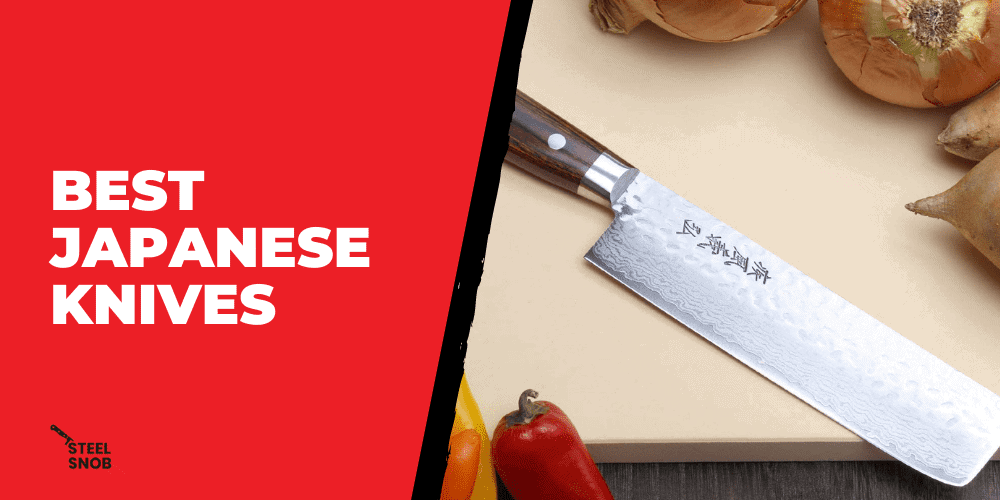
If you are shopping for the best Japanese knives, you almost certainly want one of two things: a first serious blade that will outperform whatever came in your block set, or a specific type of Japanese kitchen knife to fill a gap in a kit you already own. This guide sorts the field by both, using manufacturer specifications, independent tests and owner reports rather than spec sheets alone.
Steel Snob does not sell knives and there are no buy buttons here. What follows is a comparison of the brands and models that matter in 2026, short reviews of each, and enough background on steel, geometry, and care that you can pick well on your own.
Best Japanese Knives 2026: Comparison Table
These are the eight brands and models we recommend most, or that readers ask about most. The table is a shortlist, not a leaderboard. Read the type and steel columns first, because the right knife for you depends far more on what you cook than on which brand carries the highest reputation.
| Brand and Model | Type | Steel | Best For | Verdict |
|---|---|---|---|---|
| Shun Premier | Santoku / Gyuto | VG-MAX (clad) | First serious knife, presentation | Polished all-rounder, a touch delicate |
| Miyabi Kaizen II | Gyuto (chef) | VG10 (Damascus clad) | Home cook wanting a hard, keen edge | Sharpest out of box in this group |
| Global G-2 | Gyuto (chef) | CROMOVA 18 stainless | Light, low-maintenance daily driver | Divisive handle, near-indestructible |
| Tojiro DP | Gyuto / Santoku | VG10 (clad) | Best value, learning to sharpen | The honest workhorse of the list |
| Mac Professional | Gyuto (chef) | Proprietary high-carbon stainless | Balanced cutting, thin behind edge | Quiet favourite of many pros |
| Yoshihiro | Gyuto / Nakiri / Kiritsuke | VG10, SG2, or carbon | Buyers who want steel choice | Craft-forward, buy the right variant |
| Masamoto | Gyuto (traditional) | High-carbon or VG10 | Serious cooks, classic profile | A benchmark knife, not a beginner one |
| Miyabi Birchwood SG2 | Gyuto (chef) | SG2 / MC63 powder steel | Hardest edge retention on the list | Superb steel, demands careful use |
The Knives in Detail
Each review below is built the same way: what the knife does well, where it falls short, and who should actually buy it. No knife here is bad. The differences are about fit, not quality.
Shun Premier
The Shun Premier is the knife most people picture when they think of a Japanese blade: a hand-hammered tsuchime finish, a walnut-toned handle, and a VG-MAX core clad in Damascus layers. The fit and finish justify the reputation, and on the board it takes a fine edge and holds it well through a week of normal cooking.
Pros: Beautiful finish, excellent balance, edge geometry that suits both push and rock cuts. Easy to resell if your tastes change.
Cons: The hard, thin edge chips if you twist through bone or hit a plate. The pointed handle is comfortable for many but not for everyone.
Who it is for: The cook buying their first serious Japanese knife who wants something that performs and also looks the part on the counter. Treat it with respect and it will reward you.
Miyabi Kaizen II
Miyabi is Zwilling’s Japanese line, forged in Seki. The Kaizen II gyuto arrives frighteningly sharp, the product of a symmetric edge honed to a tight angle over a VG10 core. If you have only ever used German knives, the first cut through a tomato will reset your expectations. The Damascus cladding is decorative, but the steel underneath is the real story.
Pros: Arguably the keenest factory edge in this group. Comfortable Western-style handle. Holds an edge longer than softer stainless.
Cons: That hardness is unforgiving of lateral force. It is not a cheap knife, and the edge angle means home sharpening needs care.
Who it is for: The home cook stepping up from a German chef’s knife who wants the sharpness Japanese steel is famous for, in a familiar handle shape.
Global G-2
The Global G-2 is the outlier here and has been for decades: one-piece stainless construction, a dimpled hollow handle filled with sand for balance, and a proprietary CROMOVA 18 steel softer than VG10 but nearly rustproof. Chefs either love the light, seamless feel or hate the slick handle. There is rarely a middle opinion.
Pros: No handle seam to trap food, very light, extremely low maintenance. Takes a working edge quickly on a stone.
Cons: Softer steel dulls faster than the harder blades here. The metal handle is slippery when wet and feels cold to some.
Who it is for: The cook who values hygiene and low fuss over ultimate edge retention, and who wants a knife that shrugs off hard use.
Tojiro DP
If someone asks me for the smartest money in Japanese knives, I point at the Tojiro DP. It uses the same VG10 core steel as knives costing far more, clad in a plain stainless jacket with no Damascus theatre. The finish is simple and the handle is basic, but the cutting performance is close to knives that look far more expensive.
Pros: VG10 performance without the premium. Forgiving enough to learn sharpening on. Widely available in gyuto, santoku, and petty.
Cons: Plain looks. The bolster area can need a little deburring out of the box on some units.
Who it is for: Almost everyone starting out, and plenty of experienced cooks too. This is the knife I recommend when budget and performance both matter.
Mac Professional
Mac is the brand a lot of working chefs quietly swear by. The Professional series gyuto is thin behind the edge, well balanced, and made from a proprietary high-carbon stainless that lands between the softness of Global and the hardness of a powder steel. It disappears in the hand, the highest compliment a knife can earn.
Pros: Excellent thinness behind the edge for clean release, forgiving steel, understated build. A true daily driver.
Cons: The dimpled version’s finish can look plain. Not as flashy as Damascus-clad rivals, if that matters to you.
Who it is for: The cook who wants performance over looks and plans to use the knife hard, every day, for years.
Yoshihiro
Yoshihiro is less a single knife than a family of them. You can buy the same shape in VG10, SG2 powder steel, or reactive carbon, and the experience differs enormously between them. The craft is real and the profiles are traditional, but this is a brand where you must choose the variant deliberately, not just the model.
Pros: Wide steel and profile selection, strong hand-finished character, options for both stainless and carbon purists.
Cons: Quality and hardness vary by line. Carbon versions react and patina, which is a feature to some and a chore to others.
Who it is for: The buyer who already knows which steel they want and wants a craft-forward blade to match, whether that is a nakiri, a gyuto, or a kiritsuke.
Masamoto
Masamoto carries weight in professional Japanese kitchens. Its traditional gyuto uses a taller, flatter profile suited to push cutting, and the high-carbon versions take an edge stainless cannot match, at the cost of demanding care. This is a benchmark knife, the kind other makers are measured against.
Pros: Reference-grade edge and profile, deep pedigree, superb for precise push cuts.
Cons: Carbon variants rust if neglected. The flat profile rewards good technique and punishes sloppy rocking. Not a forgiving first knife.
Who it is for: The experienced cook ready to commit to proper technique and maintenance in exchange for a truly excellent edge.
Miyabi Birchwood SG2
At the top of the hardness scale sits the Miyabi Birchwood, built around SG2 powder steel hardened to around 63 on the Rockwell scale. It holds an edge longer than anything else on this list, which means fewer trips to the stone. The trade-off is brittleness: this is a knife for boards and soft ingredients, never for bone or frozen food.
Pros: Best-in-class edge retention, gorgeous birch handle, a genuinely long-lived edge for the patient owner.
Cons: Hardness means chipping risk if misused. Sharpening the harder steel takes more skill and better stones.
Who it is for: The careful cook who wants to sharpen as rarely as possible and will treat the blade accordingly.
How to Choose: Japanese vs German, Knife Types, Bevels, and Care
The table and reviews above only help if you know what you are choosing between. This section covers the four decisions that actually determine which Japanese kitchen knife belongs in your hand.
Japanese vs German Knives
The core difference is steel hardness and the geometry it allows. German knives, like a classic Wusthof or Zwilling, use softer steel around 56 to 58 Rockwell, ground to a wider angle near 20 degrees per side: tough, forgiving, easy to sharpen, but never as keen. Japanese knives run harder, often 60 to 63 Rockwell, ground thinner and tighter, near 15 degrees. The result is a sharper, cleaner cut that lasts longer between sharpenings, at the cost of being more brittle. If you chop through bones and squash without thinking, German steel forgives you. If you want the cleanest slice and will respect the edge, Japanese steel wins. Most serious kitchens keep both. For a fuller side-by-side, see our guide to the best German kitchen knives.
Knife Types: Gyuto, Santoku, Nakiri, and Petty
The gyuto is the Japanese chef’s knife, typically 210 to 240mm, with a curved belly that handles rock and push cuts alike. It is the one knife that does most of the job, and if you buy only one Japanese knife, buy a gyuto.
The santoku is shorter, around 165 to 180mm, with a flatter profile and a rounded tip. It favours straight up-and-down chopping and is friendly to smaller hands and smaller boards. It is the most popular first Japanese knife for a reason. Our best santoku knife guide goes deeper on the type.
The nakiri is a flat, rectangular vegetable knife. Its dead-straight edge makes full contact with the board, so it slices vegetables cleanly in a single push with no rocking. If you cook a lot of produce, it is a revelation. See the best nakiri knife for dedicated picks.
The petty is the Japanese answer to a paring or utility knife, roughly 120 to 150mm, for the detail work a big blade cannot manage: peeling, trimming, and delicate slicing. It is the ideal second knife once you own a gyuto or santoku.
Single vs Double Bevel
A double-bevel knife is sharpened on both sides, like a Western knife, and cuts straight for either hand. Every knife in the comparison table above is double-bevel, which is what almost every home cook should own. A single-bevel knife, such as a traditional yanagiba or usuba, is ground on one side only. It produces an astonishingly clean cut for tasks like slicing sashimi, but it is handed, harder to sharpen, and steers in the cut until you learn it. Unless you have a specific traditional task in mind, stay with double-bevel.
Care and Sharpening
Japanese steel rewards care and punishes neglect. Hand wash and dry immediately; the dishwasher will ruin an edge and can crack a handle. Use end-grain wood or soft poly boards, never glass, stone, or ceramic, which chip a hard edge on the first cut. Store on a magnetic strip or in a guard, not loose in a drawer.
Sharpen on water stones, not a pull-through gadget that grinds a coarse Western angle onto your fine Japanese edge. A 1000-grit stone maintains most knives, with a finer stone to refine. Carbon steels also need drying and a light oil, and they develop a grey patina that is normal and even protective. If you have never used a stone, start on a forgiving blade like the Tojiro. Our best whetstone guide covers grits and picks.
How We Evaluate
Every knife on this list earns its place through manufacturer specifications, independent tests and owner reports, not marketing copy. Here is what we look at.
- Out-of-box edge: Factory sharpness as reported by owners and independent testers before any sharpening, to judge what you actually receive.
- Edge retention: How long owners report the working edge lasting before it needs a stone.
- Geometry and release: How thin the blade is behind the edge and how cleanly food releases from the face, which matters more than raw sharpness for daily work.
- Balance and comfort: Reported fatigue, grip security, and handle comfort over long prep sessions, not a thirty-second showroom impression.
- Sharpenability: How readily each blade takes a new edge on water stones, since a knife you cannot maintain is one you will stop using.
- Durability: Chipping, staining, and handle wear reported across weeks of real use, with honesty about which knives are fragile.
No manufacturer sees a review before it publishes. If a knife disappoints, we say so.
Frequently Asked Questions
What is the best Japanese knife for beginners?
A double-bevel gyuto or santoku in VG10 steel is the ideal first Japanese knife. The Tojiro DP is my standing recommendation because it delivers real VG10 performance while being forgiving enough to learn sharpening on and inexpensive enough that a mistake is not a disaster.
Are Japanese knives better than German knives?
Neither is universally better. Japanese knives are sharper, harder, and cleaner cutting but more brittle. German knives are tougher, more forgiving, and easier to maintain but never as keen. The right answer depends on how you cook and how carefully you treat your tools. Many cooks own both.
What steel should I look for in a Japanese knife?
VG10 is the reliable all-round stainless: sharp, holds an edge well, and easy enough to maintain. SG2 or R2 powder steel holds an edge even longer but is harder to sharpen and more brittle. Reactive carbon steel takes the finest edge of all but requires drying, oiling, and patience. Start with VG10 unless you have a specific reason not to.
Do Japanese knives need special sharpening?
Yes. Their thin, hard edges should be maintained on water stones, not pull-through sharpeners, which impose a coarse Western angle and can chip the edge. A 1000-grit stone handles routine maintenance, with a finer stone to refine. It is a learnable skill and worth the effort.
Can Japanese knives cut through bone?
No, and this is the most common way people ruin them. The hard, thin edges chip when they meet bone, frozen food, or hard squash. Keep a cheaper, tougher Western knife or a cleaver for those jobs and reserve your Japanese blade for boards, produce, and boneless proteins.
How long do Japanese knives last?
A well-made Japanese knife lasts decades with proper care. Hand washing, correct storage, board discipline, and regular stone sharpening are what determine lifespan far more than the price paid. Neglect, especially the dishwasher and hard cutting surfaces, is what kills them early.
The Bottom Line
To start, buy a double-bevel gyuto or santoku, and the Tojiro DP gives you the most performance for the least risk. Want a showpiece that also cuts well? The Shun Premier or Miyabi Kaizen II earns its keep. Cook mountains of vegetables? Add a nakiri. Whatever you buy, the care you give it matters more than the badge on the blade. Pick the type that fits your cooking, respect the edge, and a good Japanese knife will outlast most of the kitchen around it.
About this guide
Steel Snob Editorial
Researched from manufacturer specifications, independent tests and owner reports, and edited for accuracy by the Steel Snob team.