
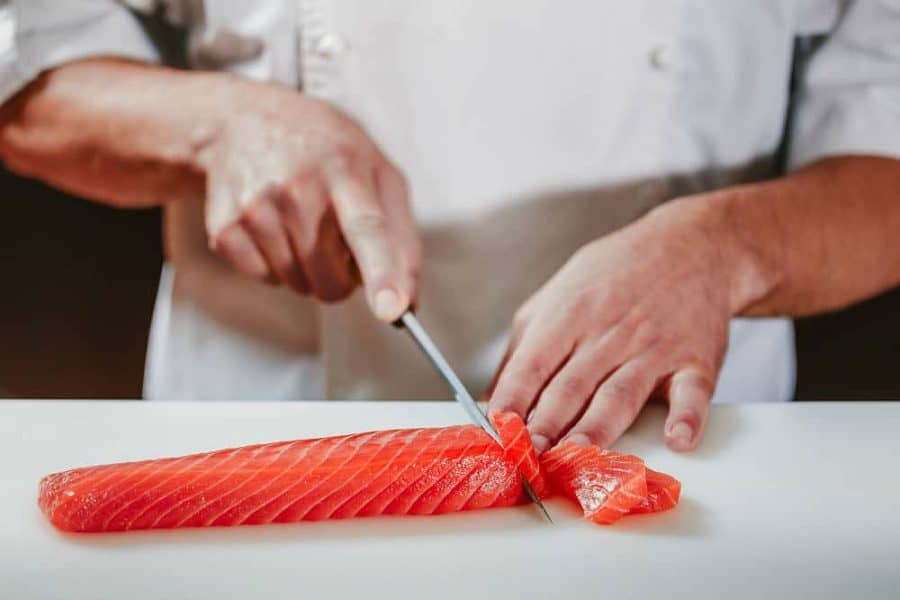
To cut sashimi, use a long, single-bevel Japanese slicing knife (a yanagiba) and draw it through the fish in one smooth pull-stroke, slicing across the grain at a slight angle into pieces roughly one centimeter thick. The keys are a razor-sharp blade, a firmly chilled fillet, and one confident stroke per slice rather than a back-and-forth sawing motion.
Sashimi is one of the purest dishes in Japanese cooking. There is no rice, no cooking, and nowhere to hide, so the quality of your fish and the cleanness of your cut are everything. The good news is that slicing sashimi at home is a learnable skill, and once you have it you can plate restaurant-quality raw fish for a fraction of the cost of eating out.
This guide covers what sashimi actually is, which fish work best, a step-by-step method for slicing it, the traditional cutting styles, and the knives that make transparent, clean slices possible. Master the basics and you can practice your passion at home and invite guests over once the technique clicks.
What Is Sashimi?
People often assume sushi, nigiri, and sashimi are the same thing, but they are three distinct dishes. Understanding the difference makes it clearer why sashimi puts so much weight on the cut itself.
Sushi
Sushi is always built around rice. The rice is seasoned with vinegar, and that vinegared rice is the defining element of the dish. The vinegar gives sushi its signature sour note. Modern sushi can include raw fish, but raw fish is not what makes something sushi. Sushi also frequently includes vegetables, cooked seafood, and other ingredients. Strip everything else away and the vinegared rice is what makes a sushi a sushi.
Nigiri
Nigiri shares traits with both sashimi and sushi. It uses raw seafood, but that seafood is pressed over a small, hand-formed mound of vinegared rice. Because the dish centers on the fish over rice, it usually skips add-ins like avocado or cucumber and lets the raw fish and rice stand on their own.
Sashimi
Sashimi, by contrast, is all about fresh raw fish with no rice at all. Chefs typically use fish such as salmon or tuna, along with other raw seafood, sliced thin and arranged over a bed of shredded daikon. The single biggest difference between sushi, nigiri, and sashimi is that sashimi is not served with rice, and it is not technically considered sushi. With nothing else on the plate, precise slicing is what separates good sashimi from great sashimi.
Best Fish For Sashimi
One of the first questions people ask is which fish makes the best sashimi. If you enjoy raw fish, any of the options below can become a delicious Japanese dish served with soy sauce, ginger, and wasabi. Be discerning about both the fish and the specific cut, because both have a direct impact on flavor and texture. Always buy fish that is labeled sashimi-grade or sushi-grade and keep it cold until you slice it.
Tuna (Maguro)
Tuna, known as maguro, is a favorite sashimi fish. The otoro cut is the most prized and expensive, coming from the fatty lower belly with its rich, high-fat marbling. Chutoro is a slightly leaner belly cut, still high in fat, with a pink color, while akami is the deep-red, leaner meat and the most affordable grade. Katsuo (bonito) is another popular option that is lightly seared on the outside and left raw within. Once you can slice cleanly, tuna pairs beautifully with garlic and ginger.
Ahi Tuna
Ahi tuna refers to bigeye and yellowfin. Bigeye ahi carries more fat and delivers a rich, buttery flavor, while yellowfin has a firmer texture that is ideal for cutting into paper-thin slices. Yellowfin also tends to have a more subtle, milder flavor than bigeye.
Salmon (Sake)
Salmon is enormously popular for sashimi, and for good reason. It tastes clean and rich, and the vivid orange flesh makes for striking presentation and plating. On Japanese sashimi menus, salmon is listed as sake. Because it is soft and forgiving, salmon is one of the best fish to learn on.
Yellowtail (Hamachi)
Yellowtail is at its best in season during the summer months. It has a creamy flavor, a translucent pink hue, and a lower fat content than many other sashimi fish, giving it a lighter feel on the palate.
Japanese Mackerel (Saba)
Saba is another name for this fish, which is wonderful grilled but also excellent raw. It is an oily fish, and while many people grill it, others prefer the rich, raw flavor of Japanese mackerel served with green onion and ginger to balance the oiliness.
Halibut
With halibut you can use the tougher fin muscle (engawa) or the fattier body section. Slice it into thin portions as a lighter, firmer alternative to the more common salmon and tuna. Its clean white flesh takes especially well to the thin, diagonal cutting styles described below.
Octopus (Tako)
Octopus sashimi is pleasantly sweet, but you must slice it extremely thin to avoid the intense rubbery texture this tako dish is prone to. You can serve octopus either boiled or raw depending on your preference.
Squid (Ika)
Sashimi chefs cut squid into fine, thin strips, similar to julienned carrots. Squid is milder than octopus, so aromatic accents like ginger and lime help lift and enhance its delicate flavor.
Best Way To Cut Sashimi
Before you can slice sashimi, decide which fish you want to work with, then choose a cut or stick with a personal favorite. The most beginner-friendly method for home use is hira-zukuri, the straight, flat slice. Follow the steps below to get consistent, clean results.
- Select the fish. Choose your favorite fish and buy it as fillets to keep things simple. Hira-zukuri is the easiest method for home sashimi, so start with fillets of the same size that are at least four fingers wide. If you are using salmon, work with the broader upper half of the fillet.
- Clean the fillet. Remove any bloodlines and excess fatty deposits. Lightly brush your fingers along the surface to locate pin bones, then pull them out with kitchen tweezers.
- Chill and position. Keep the fish cold, as a firm, chilled fillet slices far more cleanly than a warm, soft one. Place the fillet on a wooden or plastic cutting board and grasp it firmly with your non-cutting hand.
- Make the slice. With the knife held at a slight angle, slice the fillet as thinly as you can, drawing the blade from the heel to the tip in a single stroke that moves from top to bottom. Do not saw back and forth, as that tears the flesh and ruins the cut. Aim for uniform slices about one centimeter thick, adjusting thinner or thicker to taste.
- Plate the sashimi. Arrange the slices into an attractive composition, often overlapping or fanned over shredded daikon. Serve with wasabi, soy sauce, and any other accompaniments that suit your palate.
The single most important habit is that one clean pull-stroke. A long blade lets you slice the full width of the fish in one motion, which is exactly why a general-purpose kitchen knife struggles here. If your slices come out ragged, the fix is almost always a sharper edge or a firmer, colder fillet. A quick pass on a whetstone can transform how the fish releases from the blade, and our guide to sharpening a knife walks through getting that razor edge.
Traditional Sashimi Cutting Styles
Beyond the basic flat slice, chefs use several named cutting styles depending on the fish and the effect they want.
- Hira-zukuri is the flat, rectangular slice made with long, smooth strokes and the knife held at an angle. It produces slightly thicker pieces and suits oily fish such as salmon, tuna, and kingfish. This is the go-to style for home cooks.
- Usu-zukuri refers to very fine, thin, nearly transparent slices. Cut them diagonally, working across the grain of the fish. This style shines with firmer white fish, whose texture holds up well when sliced paper-thin.
- Iki-zukuri involves slicing the fish while it is still alive and then serving the cuts arranged on the remainder of the body. It is a controversial, traditional presentation that is not to everyone’s taste.
- Kaku-zukuri is a cube cut used with tender fish like bonito or tuna. Cut the fish into sticks roughly 1.5 to 2 centimeters wide, then dice the sticks into smaller cubes.
Whichever style you choose, the tool in your hand matters as much as your technique. Without a properly sharp, thin blade you will not be able to slice fish finely enough to see light through it.
What Kind Of Knife To Use?
You can attempt sashimi with an ordinary kitchen knife, but unless it is exceptionally sharp you will likely tear the slices. This is why Japanese sashimi chefs reach for a dedicated slicer, most often the yanagiba (yanagi) or the tako-hiki.
The yanagiba has a long, narrow, single-bevel blade. The sharper and thinner the blade, the easier it is to achieve those clean, translucent cuts. The tako-hiki shares the same long profile but has a squared-off, flat tip that some slicers prefer. Both are built for one job: pulling the blade through fish in a single stroke.
The three classic Japanese knives most associated with preparing fish and sashimi are:
| Knife | Primary use |
|---|---|
| Yanagiba | Long single-bevel slicer for cutting sashimi and sushi toppings in one stroke |
| Deba | Heavy, thick-spined knife for breaking down whole fish and cutting through small bones |
| Usuba | Thin, flat vegetable knife used for garnishes and shredded daikon |
Popular yanagiba and sashimi slicers include models from Yoshihiro (such as the Hongasumi and Shiroko Kasumi yanagiba), Shun (including the Classic hollow-ground slicer and the Pro 10.5-inch yanagiba), Masahiro stainless yanagiba, Kiya, Cangshan, and Wusthof’s sushi knife. Any well-made slicer with a long, thin, keen edge will help you produce the transparent slices sashimi is known for.
If you want to explore the wider world of Japanese blades and the steels behind them, our roundup of the best Japanese knives is a good starting point, and the type of steel a blade is made from has a real effect on how long that edge lasts, which our guide to the best knife steel breaks down. Once you have a slicer, a nakiri knife for daikon and vegetable garnishes rounds out a plating-ready kit.
Handling And Grip
Slicing sashimi like an expert comes down to how you hold the knife. Grip the base of the blade between your thumb and index finger for control, and position the knife’s edge below the knuckle of your middle finger on your guiding hand to keep your fingertips safely clear of the blade. This pinch grip gives you the fine control needed for consistent, transparent slices while protecting your fingers.
Get this right and the rest follows: a stable board, a firmly chilled fillet, a keen edge, and one smooth pull-stroke per slice. Practice on forgiving fish like salmon before moving to firmer white fish, and your cuts will steadily improve.
Frequently Asked Questions
What knife is best for cutting sashimi?
A yanagiba is the traditional choice. It is a long, single-bevel Japanese slicer whose thin blade lets you cut a full slice in one stroke, which is exactly what clean sashimi requires. The tako-hiki, which has a flat tip, is a common alternative. If you only have a Western chef’s knife, make sure it is extremely sharp before attempting sashimi.
How thick should sashimi slices be?
A good default for the flat hira-zukuri style is about one centimeter thick. Oily fish like salmon and tuna are usually cut slightly thicker, while firmer white fish are often cut paper-thin in the usu-zukuri style. Adjust to your own preference, but keep every slice on a plate consistent for the best presentation.
Can I use regular fish from the grocery store for sashimi?
Only buy fish specifically labeled sashimi-grade or sushi-grade, and buy it from a trusted fishmonger. Freshness and proper handling matter enormously when fish is eaten raw. Keep the fillet cold right up until you slice it, and slice it as close to serving time as possible.
Why do my sashimi slices look ragged instead of clean?
Ragged slices almost always come from one of two causes: a dull knife or a fillet that is too warm and soft. Sharpen your blade so it is genuinely razor keen, keep the fish well chilled and firm, and use a single smooth pull-stroke rather than sawing back and forth. Those three fixes solve the vast majority of clean-cut problems.
About this guide
Steel Snob Editorial
Researched from manufacturer specifications, independent tests and owner reports, and edited for accuracy by the Steel Snob team.