
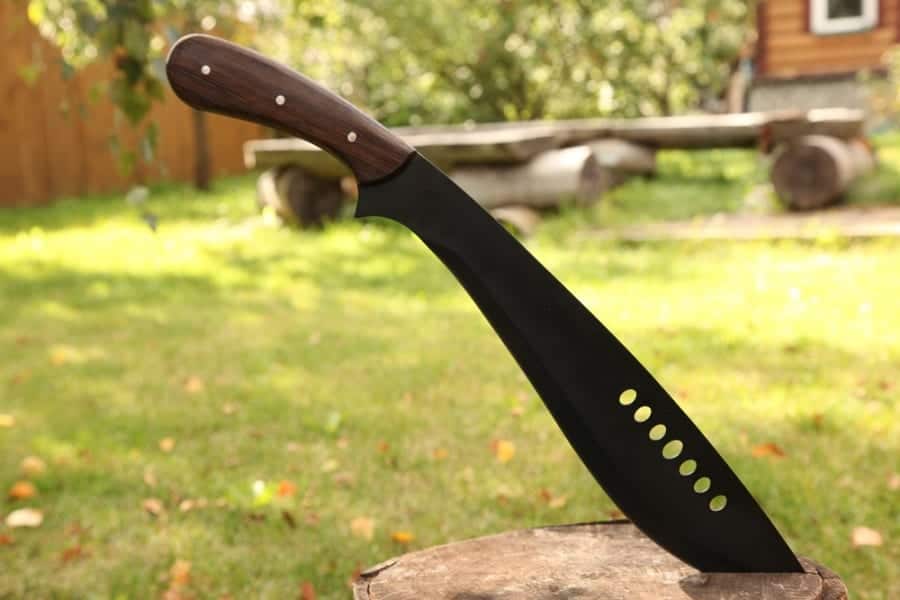
No, a machete is not a sword. A machete is a broad, single-edged working blade built for chopping vegetation and doing everyday agricultural and domestic tasks, while a sword is a longer bladed weapon designed and purpose-built for combat. They can look alike at a glance because both are large steel blades, but their design intent, history, and modern use pull them apart.
The internet always finds topics to debate. We saw the is-a-hotdog-a-sandwich argument spark serious discussions and arguments on Reddit and elsewhere. Some of those debates stay unsolved. This one does not have to. Using the right definitions and a bit of history, the question of whether a machete is a sword has a clear answer, and in 2026 it is worth settling with facts rather than gut feeling.
For years, both casual users and professionals have wondered whether a machete counts as a sword, and the confusion is understandable. Depending on the angle you view them from, a machete and a sword can seem quite similar, and that impression depends heavily on how each blade evolved inside a specific cultural context. Below, we compare the two head to head, from their definitions and origins to their real-world uses, so you can see exactly where the overlap begins and ends.
What Is a Machete?
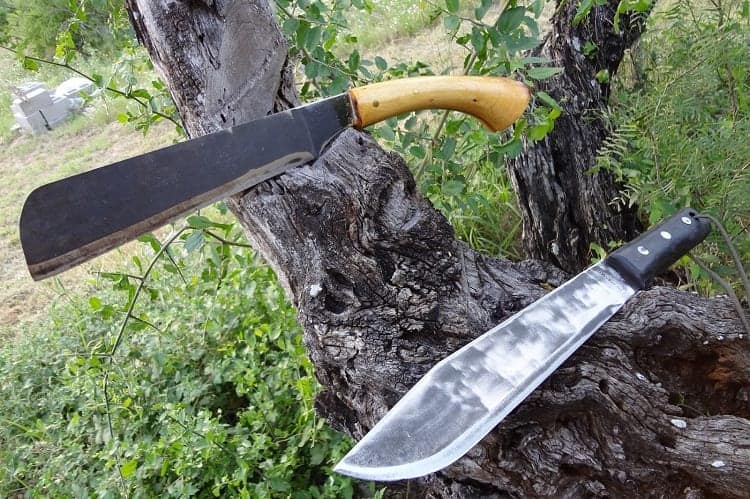
According to the Merriam-Webster Dictionary, a machete is “a large, heavy knife used for cutting sugarcane and underbrush and as a weapon.”
The word came from Spanish and was first used sometime around 1575. Given that origin, it is no surprise that the term is tied to ideas like clearing sugarcane and underbrush, and to weaponry. Some English varieties even use “machete” as a verb, meaning to cut or chop something with the blade. As with much of this discussion, that usage depends a lot on local cultural value.
In terms of design, a few ideas circle the machete. A weapon or tool does not simply appear out of nowhere. Thanks to inter-regional trade and cultural exchange, many blade designs reached places you would not expect. History records a short sword from the 13th century, the medieval falchion, whose shape resembles a machete. Similarly, the ancient Greek kopis and the Nepalese curved blade called the kukri share design cues with the modern machete. If you want to understand how these forms relate to one another, our breakdown of the different types of knives and blades is a useful map.
Keeping the history short, the machete’s modern design settles in a handful of countries across South America, Africa, and South Asia. The machete image most familiar in the United States comes from Mexico, where the blade serves many needs, both as an agricultural tool and as a combat weapon.
What Is a Machete Used For?
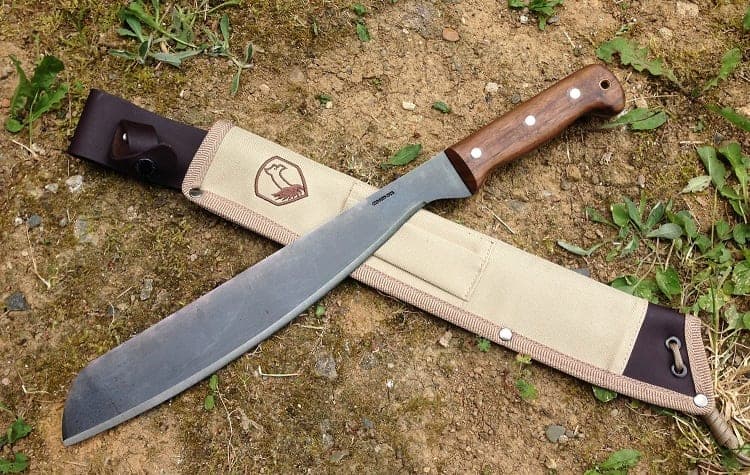
Depending on the culture, a machete can have very different uses. If we stick to the blade’s origin as it maps to the modern image, the clearest examples come from Latin America. In Mexico and other countries, a machete generally fills two roles.
As an Agricultural Tool
Thanks to its sturdy design and strong chopping performance, a machete is an excellent choice for cutting sugarcane and other agricultural material. People clearing rainforest undergrowth reach for the machete constantly, and the blade is equally handy for breaking large wood pieces into smaller logs or separating larger cuts of meat in the kitchen.
Because it has been used so widely in agriculture, the machete became an integral part of domestic work in many cultures. Across Latin America, people use it for everyday tasks like opening coconuts or chopping food. That everyday utility is exactly why the blade keeps a place in modern households and toolsheds. If you are shopping for one, our guide to the best machetes walks through blade shapes and steels, and keeping the edge working well is covered in our tutorial on how to sharpen a machete.
As a Weapon
One reason people doubt whether a machete is a sword is that they have seen it used as a weapon. Historical analysis shows machetes played a part in many uprisings worldwide, which is not surprising. For a society that uses a machete to earn its living, the blade quickly became an icon of identity and the most accessible weapon at hand.
During the independence struggles of many countries and other political uprisings, the machete was the easiest weapon to reach for. Even now, some societies carry it as a sidearm, especially in West African regions. In those settings, the machete design was often modified to fit specific requirements.
Note: Although a machete can work as a weapon, it is not necessarily designed to be one. That distinction sits at the heart of the machete-versus-sword question.
What Is a Sword?
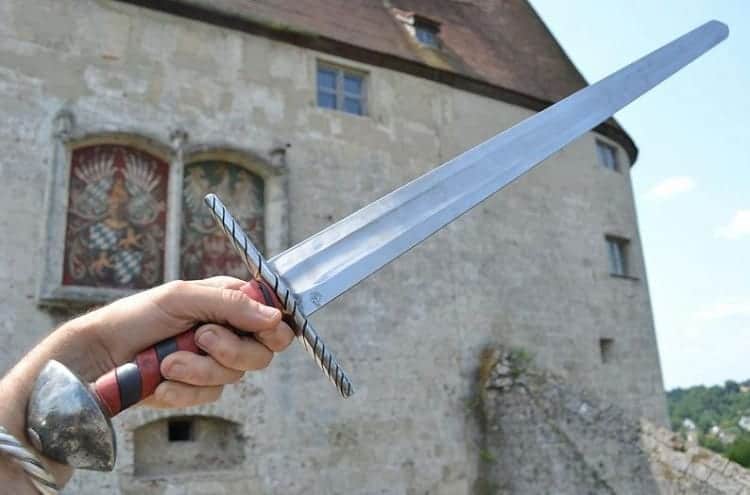
According to the Merriam-Webster Dictionary, a sword is “a weapon (such as a cutlass or rapier) with a long blade for cutting or thrusting that is often used as a symbol of honor or authority.”
Because of the impact swords have had in history and battle, the word carries abstract meanings too, though it is wise not to wander too far into those. The etymology takes us back to Middle English, with first use before the 12th century, referring to the weapon itself. The definition connects the sword to weaponry, cutting, honor, power, and authority, and some alternative definitions cover stabbing, slashing, and hacking.
In design, the ideas around a sword are more consistent. Any sword has four parts: pommel, hilt, guard, and blade. The first three protect and support whoever wields the weapon, while the blade does the real work. That thin, sharp blade handles the slashing, stabbing, or hacking, and one defining feature is that a sword’s blade is larger than that of a knife or a dagger.
Culture again produces different varieties. The Japanese katana and the Chinese dao are two of the more notable iterations. For the modern-world image, the sword mostly reflects what English swordsmanship and chivalry have taught us. That is not the most inclusive frame, but it is a convenient one.
What Is a Sword Used For?
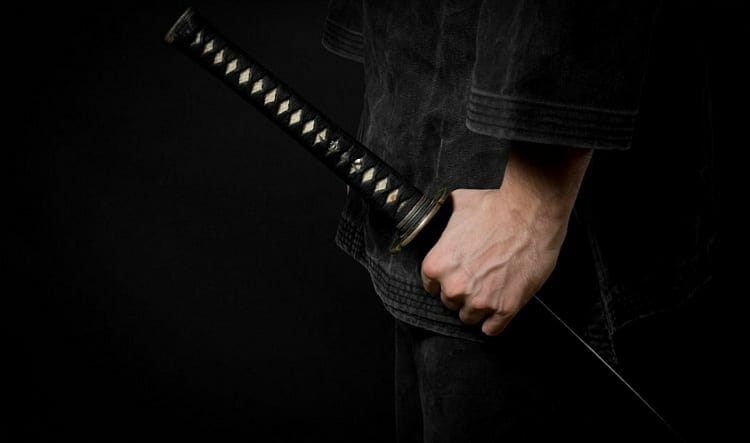
A sword is a bladed melee weapon. It can attack an opponent and defend the wielder from another attack, and depending on the need you find single-edged and double-edged examples throughout history. Because of that nature, swords were used primarily for warfare and little else, while also serving as a symbol of a person’s profession or position in society.
Today, swords have largely become a matter of history and legacy. With the rise of other easy-to-use weapons, the use of blades in combat dropped drastically. Some people still collect swords for specific reasons, but that is a small niche. Unlike the machete, the sword has stuck closely to its original design and purpose, which means it serves little practical function in modern life.
Machete vs Sword: What’s the Difference?
Now that we have looked at each blade on its own, here is the side-by-side comparison that answers the core question.
| Aspect | Machete | Sword |
|---|---|---|
| Primary purpose | Agricultural and domestic tool | Battlefield weapon |
| Design intent | Everyday chopping in the kitchen and on the land | Slicing through blood and bone in combat |
| Protective parts | Handle only, minimal guard | Can include a guard, hilt, and pommel depending on culture |
| Design evolution | Adapted to modern needs over time | A 13th-century and a 21st-century sword look almost identical |
| Modern use | Still in regular use across Latin America, Africa, and South Asia | Mostly showcase and collector value |
| Manufacture | Easy to make, affordable, favored by survivalists | Requires significant effort and money |
Spelled out, the differences are hard to miss:
- A machete is a tool built for the agricultural and domestic domain, while a sword is designed for the battlefield.
- A machete has a handy shape that suits everyday work in a kitchen or on agricultural land, whereas a sword was built to slice through blood and bone.
- A machete carries few protective measures and usually has only a handle, while a sword can include protective features depending on the culture.
- Machetes have adapted to modern designs over time because they stay in heavy use, while a sword from the 13th century and one from the 21st century would look almost the same.
- Machetes remain in regular use in modern society, especially in Latin American, African, and South Asian cultures, but swords are now limited to showcase value.
- Machetes are easy to manufacture and offer enough performance that survivalists still choose them today, while swords demand a great deal of effort and money.
As you can see, the similarity between a machete and a sword begins and ends with the shiny blade they share. From there, the gap between the two is wide.
Does the Steel Make the Difference?
Part of what makes a machete a practical tool rather than a fragile showpiece is the steel behind the edge. Machetes usually run softer, tougher carbon steels that survive repeated hard impacts against wood and brush without chipping, and they are easy to file back to a working edge in the field. Swords, by contrast, were often forged and heat-treated for a different balance of hardness, flex, and edge geometry suited to cutting and thrusting rather than chopping. If the metallurgy side of blades interests you, our overview of the best knife steel in 2026 explains how hardness, edge retention, and toughness trade off against one another. For anyone weighing a machete as an all-purpose field blade, it also helps to compare it against a dedicated survival knife, since the two serve overlapping but distinct outdoor roles.
The Conclusion
So, is a machete a sword? No. Despite the small overlap you can find between the two, many factors keep machetes and swords apart, and the most important one is purpose. The machete has remained a genuinely useful working tool, while the sword has become a largely obsolete weapon kept alive by history and collectors.
We hope this settles your question and taught you a thing or two about machetes and swords along the way.
Frequently Asked Questions
Is a machete a sword or a knife?
By definition, a machete is a large, heavy knife rather than a sword. Merriam-Webster describes it as “a large, heavy knife used for cutting sugarcane and underbrush and as a weapon,” which places it in the knife family even though its size and shape can resemble a short sword.
Why do people confuse a machete with a sword?
The confusion comes from appearance and history. A machete’s long, broad blade looks sword-like, and machetes have been used as weapons during uprisings and conflicts. Add in short historical swords such as the medieval falchion, whose shape resembles a machete, and it is easy to see why the two get mixed up.
Can a machete be used as a weapon like a sword?
Yes, a machete can work as a weapon, and it has served that role in many parts of the world. However, it is not necessarily designed to be a weapon. Its shape and steel are optimized for chopping vegetation and everyday tasks, so using it in combat is a secondary role rather than its primary purpose.
Are machetes still used today?
Very much so. Machetes remain in regular use across Latin America, Africa, and South Asia for agricultural and domestic work, and survivalists favor them because they are affordable, durable, and easy to sharpen. Swords, by contrast, have mostly become collector and showcase items.
References