
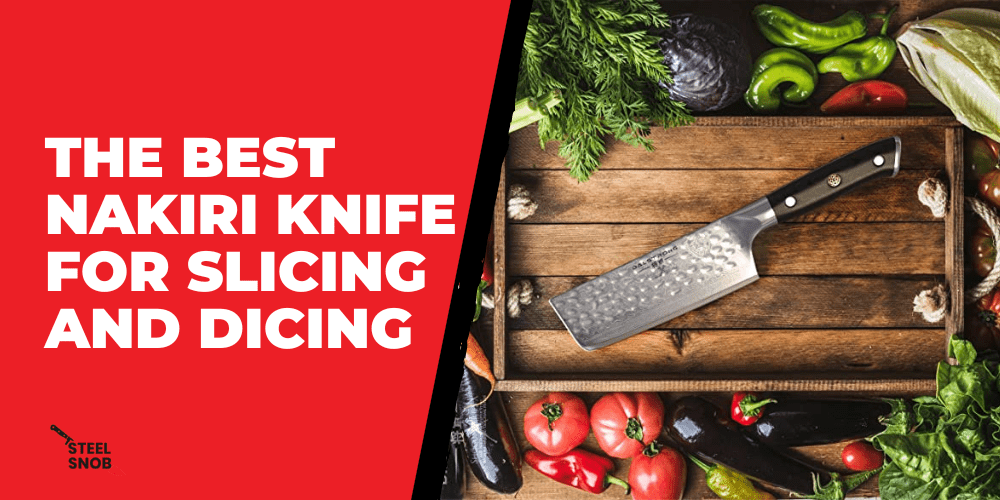
A nakiri is a flat, rectangular Japanese knife built for one job: reducing vegetables to clean, even pieces with almost no effort. If you spend most of your prep time chopping onions, dicing peppers, or breaking down cabbage, a nakiri does it faster and more precisely than a curved chef’s knife, and it is the single most useful blade I recommend to anyone who cooks a lot of produce.
The category is full of knives that look the part but, according to owner reports and independent tests, grind poorly or dull in a week. Below are the seven I stand behind in 2026, why each earns its place, and the technique and care that separate a nakiri that feels like magic from one that feels like a novelty. No prices, no hype, just what works.
The 7 Best Nakiri Knives of 2026 at a Glance
| Model | Steel | Blade Length | Best For | Verdict |
|---|---|---|---|---|
| Tojiro DP | VG-10 core, stainless clad (~60 to 61 HRC) | 165 mm (6.5 in) | Best overall for most cooks | The real-Japanese-steel benchmark. Nothing near it performs better. |
| Shun Classic | VG-MAX core, Damascus clad (~61 HRC) | 165 mm (6.5 in) | Best fit and finish | Beautiful, sharp, well balanced. You pay for the polish. |
| Miyabi Birchwood SG2 | SG2 powder steel (~63 HRC) | 170 mm (6.75 in) | Best edge retention | The sharpest, thinnest grind here. Only if you will maintain it. |
| Sakai Takayuki 33-Layer | AUS-10 core, Damascus clad (~60 HRC) | 160 mm (6.3 in) | Best mid-range value | Traditional feel and looks for well below premium money. |
| Mercer Culinary Genesis | German X50CrMoV15 stainless (~56 to 58 HRC) | 178 mm (7 in) | Best budget pick | Honest workhorse. Sharpen it more often and it earns its keep. |
| Wusthof Classic Hollow Edge | German high-carbon stainless (~58 HRC) | 178 mm (7 in) | Best for Western-knife users | Familiar weight and a full bolster. Thicker grind than the Japanese blades. |
| Yoshihiro VG-10 46-Layer | VG-10 core, Damascus clad (~60 HRC) | 165 mm (6.5 in) | Best traditional Japanese feel | Light, thin, and lively in the hand. Wants a bit more care. |
How We Evaluate Nakiri Knives
A nakiri lives or dies on a handful of things, and price is not one of them. Here is what we look for, in the order that matters.
- Grind geometry. What makes a nakiri feel effortless is how thin the blade is behind the edge, not the steel name. A thin grind glides through a sweet potato; a thick one wedges and splits it. We check spine thickness and how quickly the blade tapers.
- Out-of-box sharpness. A push cut through ripe tomato skin with no sawing tells you almost everything.
- Edge retention. We look at what owners and independent tests report about how long each knife keeps biting cleanly through dense root vegetables. Harder Japanese steels (61 to 63 HRC) hold on far longer than softer German ones (56 to 58 HRC).
- Food release. Tall, flat faces make wet slices stick. Hammered (tsuchime) and Damascus finishes help a little; nothing eliminates it.
- Balance and handle. A nakiri should feel neutral at the pinch grip, not handle-heavy.
- Ease of sharpening. Harder steel holds longer but demands more at the stone. We factor in how forgiving each blade is for a home cook, not just day-one performance.
We do not weight brand reputation, packaging, or gift appeal. A knife that chops well and sharpens sanely beats a prettier one every time.
What Is a Nakiri, and How It Differs from a Santoku and a Chef’s Knife
A nakiri (菜切り, roughly “vegetable cutter”) is a double-bevel Japanese knife with a flat edge and a squared-off, rectangular profile. That flat edge is the whole point. Because there is no belly to rock on, the entire length of the blade meets the board at once when you push straight down, giving a clean cut all the way through without the last uncut hinge of skin that curved knives leave behind. The tall blade also acts as a scoop for moving prep off the board.
People confuse the nakiri with two neighbors, so here is the plain distinction.
Nakiri vs Santoku
A santoku is a general-purpose knife with a gently curved edge and a rounded tip. It handles vegetables, boneless proteins, and light slicing, so it is more of an all-rounder. The nakiri is a specialist: flatter, taller, and better at high-volume vegetable prep, but not the knife you reach for to portion chicken thighs. If you want one knife for everything, a santoku is safer; if you already own a chef’s knife and want the best vegetable tool, buy the nakiri. See our best santoku knife guide if you are weighing the two.
Nakiri vs Chef’s Knife
A Western chef’s knife has a pronounced curved belly for rock-chopping, where you keep the tip on the board and pivot the handle. That is fast for mincing herbs but leaves uneven contact on straight cuts. The nakiri uses a push cut instead, which most people find more accurate and less tiring for large batches. A chef’s knife is the more versatile single blade; the nakiri is more comfortable and precise for produce. Our best chef’s knife roundup covers the all-purpose side of the kitchen.
One more distinction: a nakiri is double-beveled (sharpened symmetrically on both sides). The similar-looking usuba is single-beveled, a professional tool that takes real skill and a left- or right-handed commitment. For home cooks, the nakiri is almost always the right call.
The Reviews
Tojiro DP: Best Overall for Most Cooks
If someone asks me for one nakiri and does not want to overthink it, this is the answer. The Tojiro DP pairs a genuine VG-10 core, hardened to roughly 60 to 61 HRC, with stainless cladding that makes it low-maintenance. The grind is thin, owners report the edge comes sharp and stays that way through weeks of normal use, and the knife feels honest rather than decorated. It is not the prettiest blade here, but on pure cutting performance for the money it is the one I keep recommending.
- Pros: Real VG-10 edge retention; thin, capable grind; stainless clad so it forgives neglect; wide availability.
- Cons: Plain looks; the heel and bolster feel slightly boxy at first; food release is average.
- Who it is for: Anyone who wants the best cutting-to-cost ratio and does not care about a showpiece.
Shun Classic: Best Fit and Finish
The Shun Classic is what most people picture when they imagine a Japanese knife: a Damascus-clad blade, a proprietary VG-MAX core around 61 HRC, and a comfortable PakkaWood D-shaped handle. It is genuinely sharp out of the box and beautifully finished, with edge geometry more refined than most Western brands. The trade-off is a real premium for that polish, and VG-MAX, while excellent, is slightly harder to bring back on a stone than plain VG-10.
- Pros: Excellent fit and finish; sharp, refined edge; comfortable handle; good customer support.
- Cons: Priced well above what the cutting performance alone justifies; the D-handle favors right-handed users.
- Who it is for: Cooks who want a beautiful, capable knife and will treat it as a keeper.
Miyabi Birchwood SG2: Best Edge Retention
This is the sharpest, thinnest-ground knife on the list, full stop. The SG2 powder steel is hardened to about 63 HRC, so it takes an aggressive edge and holds it far longer than anything softer here. The birchwood handle is gorgeous and the balance excellent. But hardness cuts both ways: at 63 HRC the edge is more brittle, so it does not tolerate lateral force, bones, or hard squash rinds hacked at a bad angle, and sharpening demands quality stones and a steady hand. Buy it only if you will maintain it properly.
- Pros: Class-leading sharpness and edge retention; very thin, nimble grind; stunning materials.
- Cons: Brittle at 63 HRC, so it punishes bad technique; premium price; needs proper stones to sharpen.
- Who it is for: Experienced home cooks who sharpen their own knives and want the finest edge available.
Sakai Takayuki 33-Layer Damascus: Best Mid-Range Value
Sakai Takayuki comes out of Sakai, one of Japan’s historic knife-making cities, and this line gives you a traditional look and feel for far less than the premium names. The AUS-10 core sits around 60 HRC, the Damascus cladding is attractive and helps a little with food release, and the grind is thin and lively. It is not as refined at the edge as the Miyabi, but for a knife that looks and cuts like a serious Japanese blade without top-tier pricing, it is the smart middle path.
- Pros: Genuine Sakai pedigree; attractive Damascus; thin grind; strong value.
- Cons: AUS-10 edge retention trails SG2 and VG-MAX; finish quality varies slightly unit to unit.
- Who it is for: Cooks who want a traditional Japanese nakiri and a reasonable price in one knife.
Mercer Culinary Genesis: Best Budget Pick
The Genesis proves you do not need to spend a lot for a usable nakiri. It uses German X50CrMoV15 stainless at roughly 56 to 58 HRC, soft by Japanese standards, so it will not hold its edge as long and the spine is a little thicker. But it arrives respectably sharp, the Santoprene handle is grippy even when wet, and it takes a new edge quickly. Hone it every few uses and it keeps pace far above its cost. This is the one we recommend to someone outfitting a first kitchen.
- Pros: Genuinely affordable; comfortable, secure handle; easy to sharpen; durable.
- Cons: Softer steel needs frequent honing; thicker grind feels less nimble on fine work.
- Who it is for: Beginners, students, and anyone who wants a capable nakiri without commitment.
Wusthof Classic Hollow Edge: Best for Western-Knife Users
If you already cook with German knives and love that reassuring heft, the Wusthof Classic nakiri will feel like home. It is a forged, full-tang blade with a bolster and the familiar Wusthof weight, and the hollow-edge dimples give a little food release. At around 58 HRC the German steel sharpens easily and shrugs off abuse. Two honest caveats: it is noticeably handle-heavy against Japanese nakiris, and the thicker grind wedges more in dense vegetables. For a Western cook who wants a nakiri profile without a learning curve, it makes sense.
- Pros: Familiar German weight and balance; forged full tang with bolster; easy to sharpen; very durable.
- Cons: Handle-heavy; thicker grind wedges in dense produce; dimples help less than the marketing implies.
- Who it is for: Devoted Western-knife users who want a nakiri without the Japanese learning curve.
Yoshihiro VG-10 46-Layer: Best Traditional Japanese Feel
Yoshihiro builds knives that feel alive in the hand. This VG-10 nakiri, clad in 46 layers of hammered Damascus and hardened around 60 HRC, is light, thin, and quick, with a traditional wa-style handle that shifts the balance forward into the blade. It cuts beautifully and is a joy for anyone who wants the authentic Japanese experience. The trade-offs are the usual ones for a lighter blade: it wants careful handling, the wooden handle needs an occasional wipe of oil, and you should dry it promptly.
- Pros: Light, thin, nimble; authentic Japanese handle and balance; attractive hammered Damascus.
- Cons: More delicate; wooden handle needs occasional care; dry promptly to protect the core.
- Who it is for: Cooks who want the true Japanese feel and will give the knife the care it asks for.
Cutting Technique: Getting the Most Out of a Nakiri
A nakiri rewards a different motion than a chef’s knife, and learning it takes about ten minutes.
- Push cut, do not rock. Place the flat edge on the vegetable, push forward and down in one smooth motion, then lift. The whole edge contacts the board at once, so you get a clean cut with no rocking pivot. This is the core technique.
- Use a pinch grip. Pinch the blade just ahead of the handle between thumb and forefinger. It gives control the handle-only grip never will, and it is where these knives balance.
- Let the height work for you. The tall blade keeps your knuckles clear of the board. Curl your guiding hand into a claw, rest your knuckles against the blade face, and walk your fingers back as you cut.
- Do not twist or pry. A nakiri, especially a hard Japanese one, is not a lever. Never twist it to split squash or pop a joint. That is how thin, hard edges chip.
- Scoop with the flat. Turn the blade sideways and use it as a bench scraper to sweep prep into the pot.
Care and Maintenance
A good nakiri will outlast most of your other kitchen gear if you treat it with a little respect. None of this is difficult.
- Hand wash and dry immediately. Never put any of these knives in a dishwasher. The heat, the detergent, and the knocking around all damage edge and handle. Wash by hand, dry right away, especially the reactive Japanese cores.
- Hone regularly, sharpen occasionally. Softer German blades benefit from a honing rod every few uses. Harder Japanese steels are better maintained on whetstones and honed less aggressively. When cutting performance drops, it is time for the stones. See our best knife sharpener guide for the right tool per steel type.
- Use the right board. Cut on wood or soft poly, never glass, stone, or ceramic, which wreck any edge in minutes.
- Oil wooden handles and reactive cladding. A drop of food-safe mineral oil on a wa-handle keeps it from drying and cracking, and reactive cores appreciate a light wipe during long storage.
- Store it protected. A magnetic strip, knife block, or edge guard keeps the edge off other metal in a drawer.
If you want to go deeper on steels, geometry, and the makers worth knowing, our best Japanese knives guide covers the wider category the nakiri belongs to.
Frequently Asked Questions
What is a nakiri knife used for?
A nakiri is a specialist vegetable knife. Its flat, tall, rectangular blade chops, slices, and dices produce quickly and evenly using a straight push cut. It excels at high-volume work like onions, cabbage, carrots, and peppers, and the tall face doubles as a scoop. It is not designed for meat, bones, or tasks that need a pointed tip.
Nakiri vs santoku: which should I buy?
Buy a santoku if you want one versatile knife for vegetables, boneless proteins, and general slicing; its slight curve and rounded tip make it a true all-rounder. Buy a nakiri if you already own a chef’s knife or santoku and want the best dedicated vegetable tool. The nakiri’s flat edge gives cleaner straight cuts and is more comfortable for large batches, but it is a specialist, not a do-everything blade.
Is a nakiri knife worth it?
If you prep a lot of vegetables, yes, without hesitation. The flat edge and push-cut motion are genuinely faster and more precise than a curved knife for produce, and once you learn it, going back is hard. If you cook mostly meat or want a single all-purpose blade, a chef’s knife or santoku is the better first buy. As a second knife for vegetables, a nakiri is one of the best-value additions you can make.
Single bevel or double bevel: which nakiri is right for me?
For nearly every home cook, a double-bevel nakiri is the right choice. It is sharpened symmetrically, works equally well for left- and right-handed users, and is easy to maintain. Single-bevel vegetable knives (usuba) are professional tools that take real skill to sharpen and use, and they are handed, so you must buy the version matching your dominant hand. Every knife on this list is a double bevel for exactly that reason.
How do I sharpen a nakiri knife?
Whetstones are the best method, especially for a Japanese nakiri. Because the edge is flat rather than curved, sharpening is simpler than on a chef’s knife: hold a consistent angle (roughly 15 degrees per side for Japanese steels, a little wider for German) and draw the full edge across the stone in even passes on each side. Softer German blades also take a honing rod between sharpenings, but harder Japanese steels above 60 HRC really want a stone. Avoid pull-through carbide sharpeners, which remove far too much metal.
Why does food stick to a nakiri, and can I stop it?
Sticking is a side effect of the tall, flat blade face, which gives wet slices a large surface to cling to. It is normal, not a defect. Hammered (tsuchime) and Damascus finishes create small air pockets that reduce it somewhat, and thinner blades release a little better, but no nakiri eliminates it entirely. A quick flick of the blade or a light spray of water on the face solves it, and most cooks stop noticing within a week.
The Bottom Line
For most people, the Tojiro DP is the nakiri to buy: it cuts as well as knives costing far more and asks little in return. If you want beauty with performance, the Shun Classic delivers it. If you sharpen your own knives and want the finest edge available, the Miyabi Birchwood SG2 is unmatched, provided you respect its hardness. On a budget, the Mercer Genesis punches above its cost, and Western-knife loyalists will feel at home with the Wusthof. Whichever you choose, learn the push cut, keep it off the dishwasher, and give it a stone when it dulls. A nakiri treated that way will change how you feel about vegetable prep, and it will still be doing it a decade from now.
About this guide
Steel Snob Editorial
Researched from manufacturer specifications, independent tests and owner reports, and edited for accuracy by the Steel Snob team.