
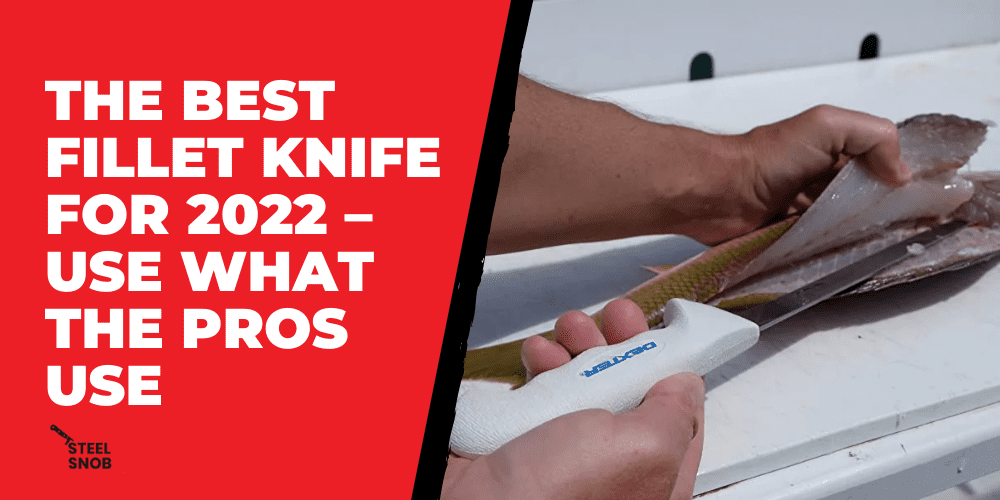
If you want a knife that turns whole fish into clean, boneless portions with less waste, this guide covers the best fillet knives for 2026 across freshwater, saltwater, and kitchen work. We compared manual and electric options for everything from small panfish to heavy saltwater slabs so you can match a blade to the fish you actually catch and cook.
What follows is not a spec sheet reprint. It draws on independent tests and owner reports to show which fillet knives hold an edge, flex the right amount, and stand up to salt water. No affiliate noise here. Products are named so you can go find them yourself and judge on merit.
Best Fillet Knives at a Glance
The table below narrows the field to eight knives that earned their place through real filleting, not marketing copy. Blade length and flex are the two numbers that matter most, so read those columns before anything else.
| Knife | Type | Blade Length | Flex | Best For | Verdict |
|---|---|---|---|---|---|
| Bubba 7-Inch Tapered Flex | Manual | 7 in | Medium | Freshwater and inshore all-rounder | The safest first buy for most anglers |
| Dexter-Russell SofGrip 8-Inch | Manual | 8 in | Medium-stiff | High-volume cleaning | Workhorse that outlives fancier knives |
| Rapala Fish ‘n Fillet | Manual | 6 in | Medium-high | Panfish and trout | Simple, sharp, honest carbon steel |
| Morakniv Fishing Comfort 6155 | Manual | 6.1 in | High | Small to mid freshwater fish | Best flex-per-dollar |
| Wusthof Classic Ikon 7-Inch | Manual (kitchen) | 7 in | Medium | Counter work and precise trimming | The kitchen fillet knife to own for life |
| Kershaw Clearwater 7-Inch | Manual | 7 in | Medium | Saltwater durability | Corrosion-tough with a grippy handle |
| Bubba Pro Series Cordless Electric | Electric | Interchangeable | Blade-dependent | Big batches, large fish | The electric to beat for saltwater volume |
| Rapala R12 Lithium Cordless | Electric | Standard/long sets | Blade-dependent | Runtime and reach | Best cordless runtime for long cleaning sessions |
How We Evaluate Fillet Knives
Every knife on this list went through the same routine, because a fillet knife only earns trust when you can predict how it behaves before the blade touches the fish.
- Edge out of the box. We looked at what owners report about the factory edge: whether it is usable out of the box or needs immediate sharpening.
- Flex under load. We looked for reports on how well the tip tracks the rib cage on both soft and firm fish instead of digging into meat.
- Edge retention. We weighed owner reports of how many fish a knife cleans before it starts tearing rather than slicing, which is the real-world signal that an edge is gone.
- Handle security when wet. Slime and blood make handles slick. We looked at handle design and owner reports to judge which knives stay planted in wet, oily hands.
- Corrosion. We checked steel type, coatings and owner reports for how each blade resists rust after salt-water use. This separated the marketing “stainless” claims from reality.
- Cleanup and storage. Sheath fit, whether the handle traps water, and how easily electrics come apart for rinsing all counted.
No knife wins every category. The right pick is the one that matches your fish, your volume, and how much maintenance you are honestly willing to do.
Blade Flex and Length by Fish Size
Most bad filleting results trace back to the wrong blade, not the wrong technique. Flex controls how closely the blade follows curves and bones. Length controls how much of the fish you clear in a single stroke. Get these two right and the knife does half the work for you.
Flex, from soft to stiff
- High flex (thin, whippy): Ideal for small, soft fish like panfish, trout, and perch. The blade bends over the rib cage and lifts meat off bone with almost no waste. Too much flex on a big fish, though, and you lose the control to cut through a thick shoulder.
- Medium flex: The all-rounder. Enough give to follow a spine, enough backbone to power through a walleye or a small snapper. If you own one fillet knife, own a medium flex.
- Stiff or medium-stiff: For large, firm, or tough-skinned fish such as big saltwater species, salmon, and lingcod. Stiffness gives you the leverage to portion steaks and push through dense flesh without the tip wandering.
Length, by fish size
- 4 to 6 inches: Panfish, trout, crappie, small bass. A short blade is nimble and stays in control on a small body.
- 6 to 7.5 inches: The everyday range. Walleye, bass, redfish, medium snapper. Long enough to clear a side in one or two passes.
- 8 to 9 inches and up: Salmon, lingcod, large offshore fish. The extra reach lets you run a clean full-length stroke instead of sawing.
If you fish a wide range, two knives cover almost everything: a high-flex 6-inch for small fish and a medium 7-inch or a stiff 8-inch for the rest.
The Fillet Knives, Reviewed
Bubba 7-Inch Tapered Flex
This is the knife we recommend to someone buying their first serious fillet blade. The medium flex tapered blade holds an edge well through freshwater and light inshore work, and owners rate the oversized non-slip handle as one of the most secure grips when your hands are covered in slime.
- Pros: Excellent wet grip, forgiving medium flex, tough coating resists corrosion, comes with a sheath.
- Cons: The chunky handle feels big for small, delicate panfish work; heavier than a bare-steel knife.
- Who it is for: Anglers who want one dependable knife for bass, walleye, and inshore saltwater without babysitting it.
Dexter-Russell SofGrip 8-Inch
The knife you see in fish markets and processing shops, and there is a reason. The medium-stiff 8-inch blade powers through volume, the textured handle stays put, and it sharpens back to keen with almost no effort. It is plain, and that is the point.
- Pros: Built for high-volume cleaning, easy to resharpen, secure handle, long service life.
- Cons: Plain looks and no premium feel; the length is overkill for small fish.
- Who it is for: Anyone who cleans a lot of fish and wants a tool that just works for years.
Rapala Fish ‘n Fillet
A classic that has cleaned more freshwater fish than almost any knife made. The Scandinavian-ground carbon steel takes a razor edge and the birch handle warms in the hand. It rewards care and punishes neglect, which is a fair trade for how well it cuts.
- Pros: Superb factory edge, easy to sharpen, light and nimble, honest simple design.
- Cons: Carbon steel will rust if you leave it wet; the wood handle needs occasional oil.
- Who it is for: Panfish and trout anglers who do not mind wiping and drying their blade every time.
Morakniv Fishing Comfort 6155
The best flex-per-dollar knife in this guide. The thin, high-flex Swedish stainless blade curves over a rib cage beautifully, and the rubberized handle is comfortable through a long cleaning session. On small and mid freshwater fish it punches far above its modest price.
- Pros: Outstanding flex, comfortable grippy handle, stainless holds up better than carbon, keen edge.
- Cons: Too flexible for large or firm fish; the sheath is basic.
- Who it is for: Freshwater anglers cleaning trout, perch, and panfish who want maximum control.
Wusthof Classic Ikon 7-Inch
This is a kitchen fillet knife, and it belongs on the counter more than the dock. The forged German blade holds a fine edge for precise trimming, skinning, and portioning fish you have already brought home. Balance and fit and finish are a class above the field.
- Pros: Excellent edge retention, precise medium flex, superb balance, built to last decades.
- Cons: Not made for dockside abuse or salt exposure; needs proper hand-washing and drying.
- Who it is for: Home cooks and chefs who fillet, skin, and trim fish in the kitchen.
Kershaw Clearwater 7-Inch
If you want a knife you can leave slightly damp and not panic about, this is the one. The stainless blade shrugs off corrosion better than most, the co-polymer handle grips wet, and the medium flex handles a broad range of saltwater and freshwater fish.
- Pros: Strong corrosion resistance, secure wet handle, versatile medium flex, comes sheathed.
- Cons: Factory edge is good but not the sharpest here; a touch tip-heavy for delicate work.
- Who it is for: Saltwater anglers who want durability without paying a premium.
Bubba Pro Series Cordless Electric
The electric that makes the strongest case for batch cleaning. Interchangeable blades let you match flex and length to the fish, the motor has real torque for large species, and the grip stays secure when everything is wet and slick. If you clean coolers of fish, this earns its keep fast.
- Pros: Interchangeable blade sets, strong motor for big fish, secure ergonomic grip, cordless freedom.
- Cons: Heavier and pricier than manual knives; more parts to rinse and dry.
- Who it is for: Anglers cleaning large volumes or big saltwater fish who want speed.
Rapala R12 Lithium Cordless
For runtime, this is our pick. The lithium pack cleans a serious pile of fish on a charge, and the reciprocating blades run smooth and straight. It trades the interchangeable-flex flexibility of the Bubba for longer sessions between charges.
- Pros: Excellent battery runtime, smooth blade action, available long blades for big fish, comfortable grip.
- Cons: Fewer blade-flex options than rivals; charger and battery add bulk to your kit.
- Who it is for: Anglers who want the longest cordless cleaning sessions without swapping batteries.
Electric vs Manual: Which You Actually Need
Electric knives win on speed and volume. If you regularly bring home a cooler of fish or process large saltwater species, an electric saves your hands and your evening. They also flatten the learning curve, since the reciprocating blade does the sawing for you.
Manual knives win on control, portability, and precision. For small fish, delicate work, or a day when you clean three or four fish streamside, a good manual blade is faster to deploy, easier to clean, and never runs out of battery. Most serious anglers end up owning one of each and reaching for whichever fits the day.
Care, Sharpening, and Rust Prevention
A fillet knife lives in the worst environment a blade can face: wet, salty, and covered in protein. The knives that last are simply the ones that get cared for. The routine is short.
- Rinse immediately. Fresh water, right after cleaning, before slime and salt dry onto the steel.
- Dry completely. Wipe the blade fully dry, including the spine and the area near the handle where water hides. Trapped moisture is where rust starts.
- Never store wet in a sheath. A damp blade sealed in a sheath is a rust factory. Dry first, then sheath.
- Oil carbon steel. Carbon knives like the Rapala want a light film of food-safe oil if they will sit unused. Wood handles appreciate an occasional oiling too.
- Keep it keen. A fillet edge dulls fast against bone and skin. A few passes on a fine stone or a quality sharpener between trips keeps it slicing instead of tearing. Learn more in our guide to the best knife sharpener.
Even stainless is only rust-resistant, not rust-proof. Salt water plus neglect will spot any blade. Two minutes of care after every session is the whole secret to a knife that lasts a decade.
Frequently Asked Questions
What length fillet knife should I buy first?
A 7-inch medium-flex blade covers the widest range of fish and is the safest single purchase. Go to a 6-inch high-flex if you mostly clean panfish and trout, or an 8-inch stiffer blade if you target large saltwater fish.
Is an electric fillet knife worth it?
If you clean fish in volume or process large species, yes. Electrics are faster, easier on your hands, and forgiving for beginners. For a handful of small fish, a manual knife is simpler and just as effective.
How much should a fillet knife flex?
Match flex to fish size. High flex for small soft fish, medium flex as an all-rounder, and stiff for large or firm fish. Flex controls how closely the blade follows the rib cage without wasting meat.
What is the difference between a fillet knife and a boning knife?
A fillet knife has a longer, thinner, more flexible blade built to follow fish bones and skin. A boning knife is shorter and stiffer for separating meat from bone in poultry and red meat. See our best boning knife guide for that job.
How do I keep a fillet knife from rusting?
Rinse in fresh water right after use, dry it completely including near the handle, and never store it wet in a sheath. Carbon steel blades also benefit from a light coat of food-safe oil during storage.
Can I use a kitchen fillet knife on the dock?
You can, but a forged kitchen knife like the Wusthof is happier on the counter. Dockside abuse and salt exposure are better handled by a dedicated corrosion-resistant fishing knife such as the Kershaw Clearwater or a Bubba.
The Bottom Line
For most anglers, the Bubba 7-Inch Tapered Flex is the right first knife: forgiving flex, a grip that holds when wet, and steel that survives real use. High-volume cleaners should look at the Dexter-Russell SofGrip 8-Inch, panfish specialists at the Morakniv, and kitchen cooks at the Wusthof Classic Ikon. If you process big batches, the Bubba Pro Series and Rapala R12 electrics do the heavy lifting. Pick by fish size and flex first, care for the blade second, and any of these will serve you for years. When you are stocking the rest of the kit, our guides to the best electric knife and best kitchen knife round out the drawer.
About this guide
Steel Snob Editorial
Researched from manufacturer specifications, independent tests and owner reports, and edited for accuracy by the Steel Snob team.